Neperforovaná 15h z TD VI poštovně použitá — Košice 2, 13. VII. 1920
Pohlednice frankovaná dvojicí Hradčan — 15 h cihlově červenou a 5 h světle zelenou — vypadá na první pohled nenápadně. Razítko KOŠICE 2 * Č.S.P. s čitelným datem 13. VII. 1920 však znehodnocuje známku, která si zaslouží pozornost: 15h je neperforovaná, a jak ukázalo určení desky a pole, pochází ze 6. tiskové desky. Pohlednice je dochována celá; obrázky níže jsou pouze výřezy z její frankatury.
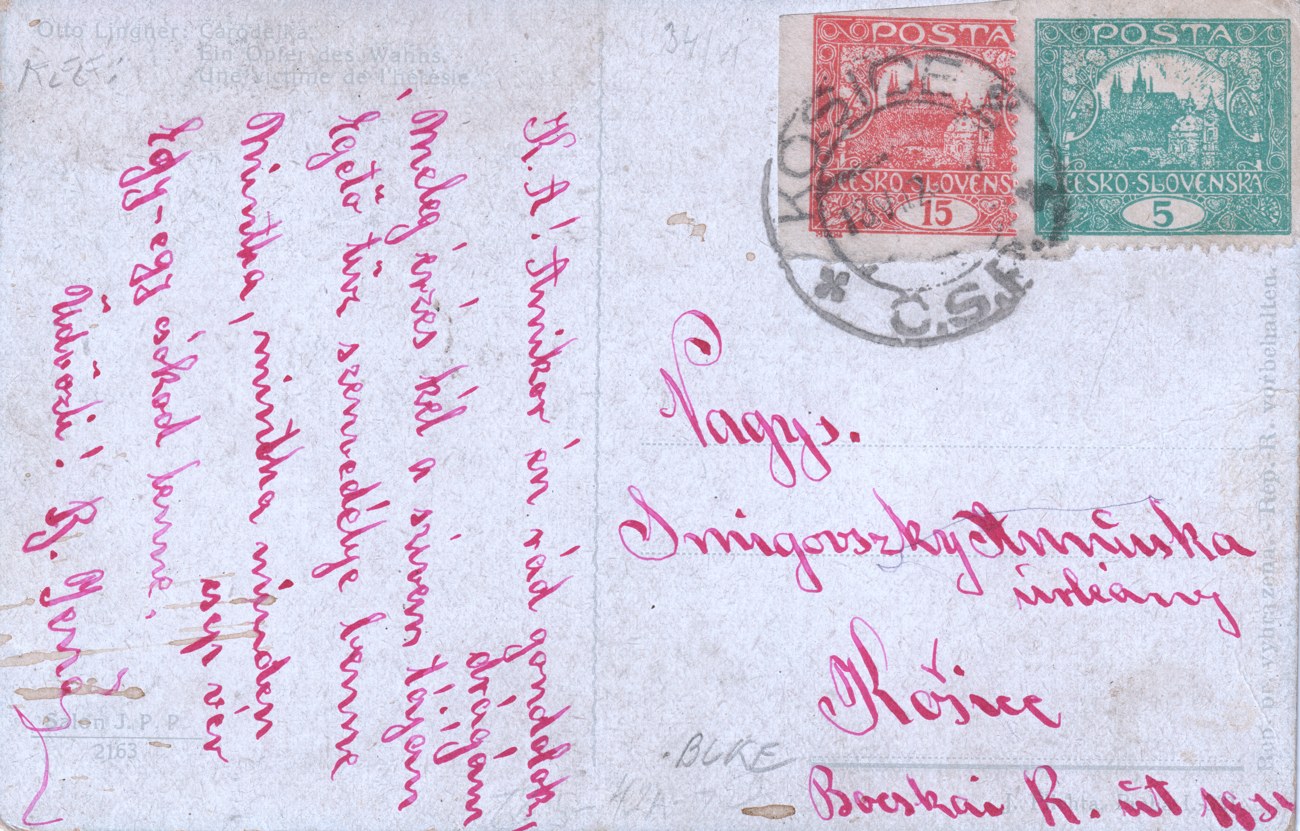
Datum 13. VII. 1920 spadá do III. tarifního období (15. 3. 1920 – 31. 7. 1920), v němž sazba za tuzemskou dopisnici činila 20 h. Frankatura 15 h + 5 h = 20 h přesně odpovídá této sazbě — jde tedy o řádně vyplacenou dopisnici těsně před koncem III. období, necelé tři týdny před přechodem na citelně vyšší IV. tarif (dopisnice 40 h od 1. 8. 1920).
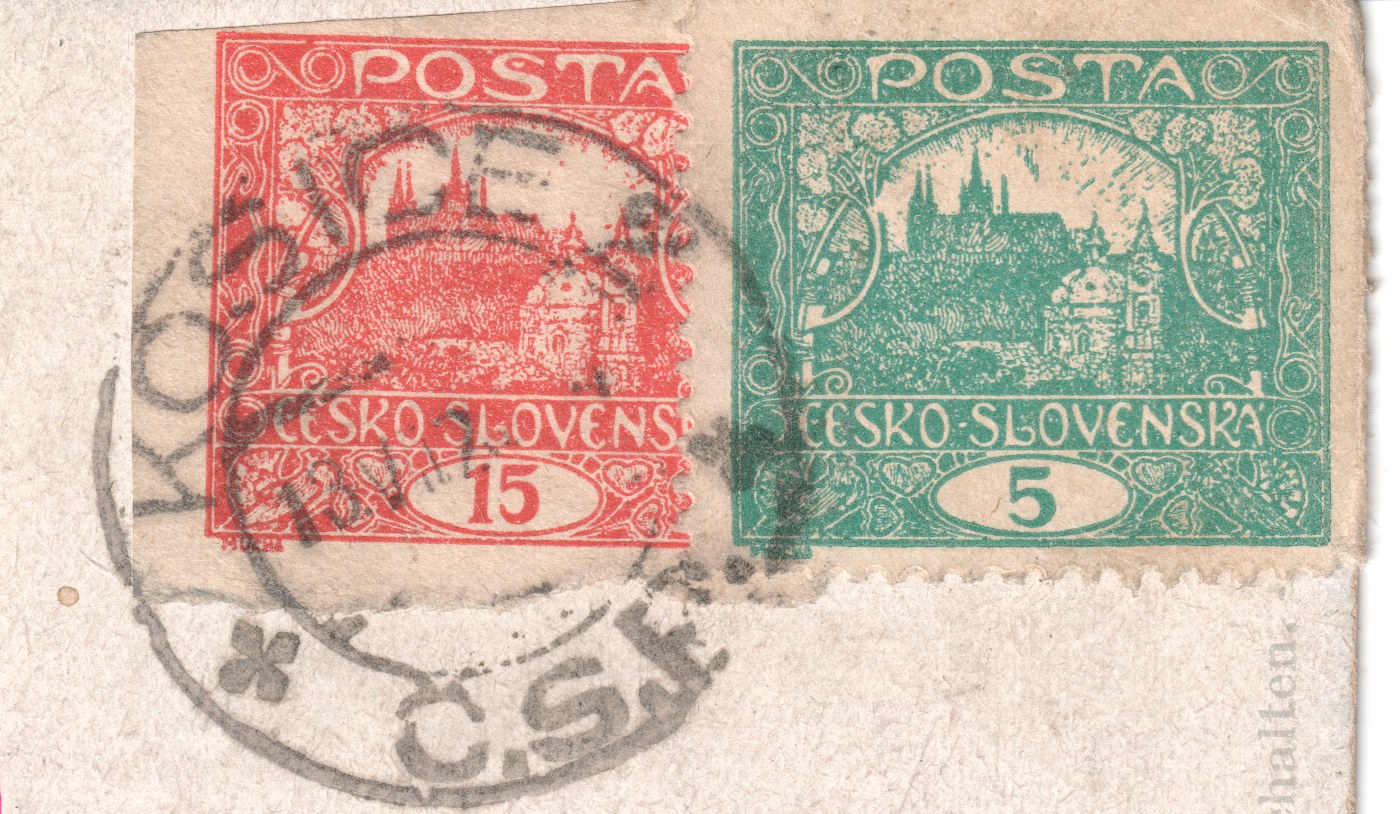
Nezoubkované 15h archy jsou běžně dokladovány z tiskových desek 1 a 2. Poštovně použitá neperforovaná známka z TD 5 nebo TD 6 je naproti tomu vzácným výskytem — a právě takový kus se zde podařilo doložit, včetně plného data použití.
Určení desky a známkového pole
Známka byla určena porovnáním s referenční knihovnou použitých známek (přes 11 000 registrovaných kusů všech sedmi desek) jako známkové pole 34 tiskové desky VI. Určení potvrdily bodové vady — souhvězdí teček v obloze vpravo od katedrály a charakteristická tečka těsně vlevo od špičky šesté věžičky.
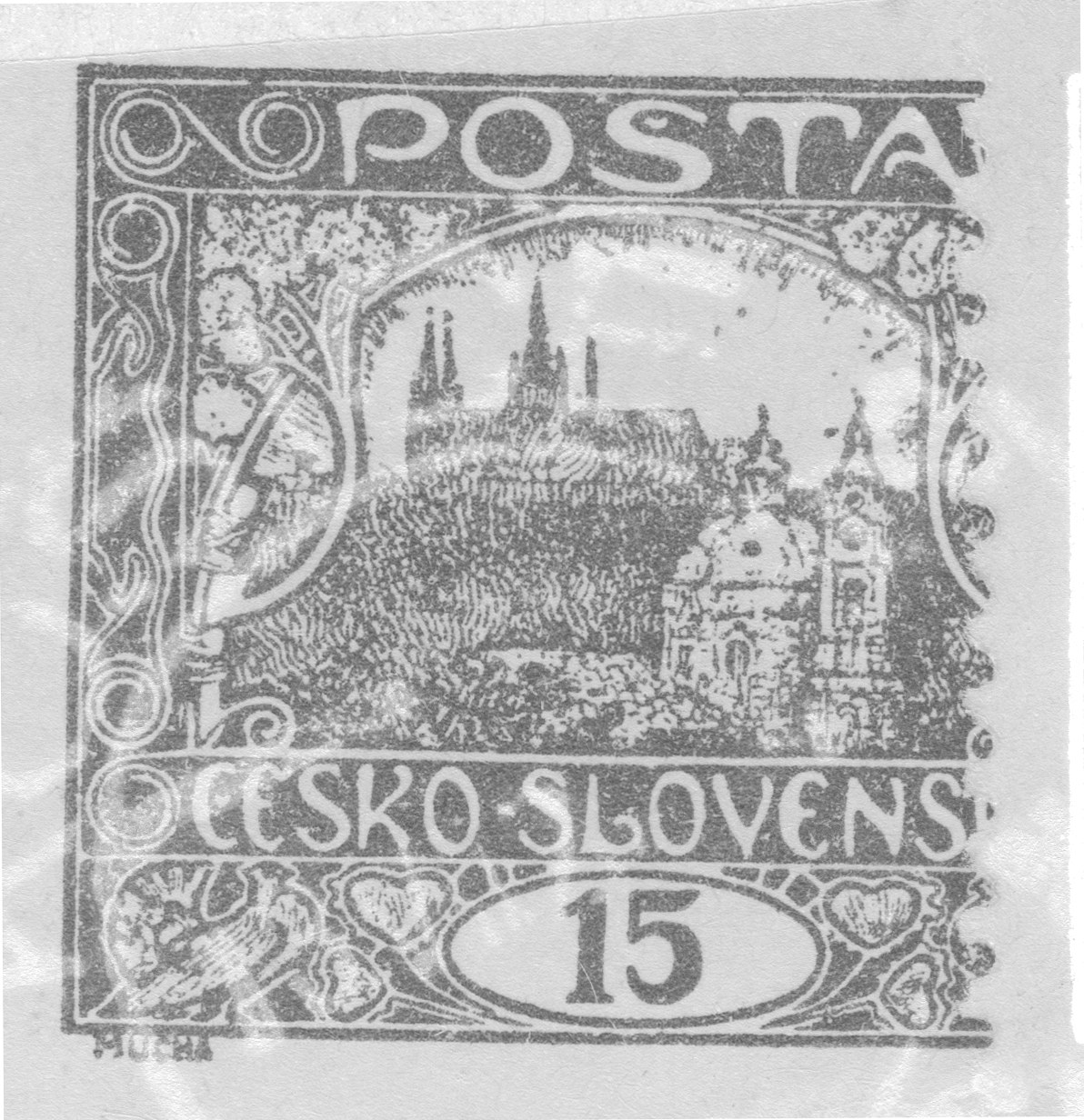
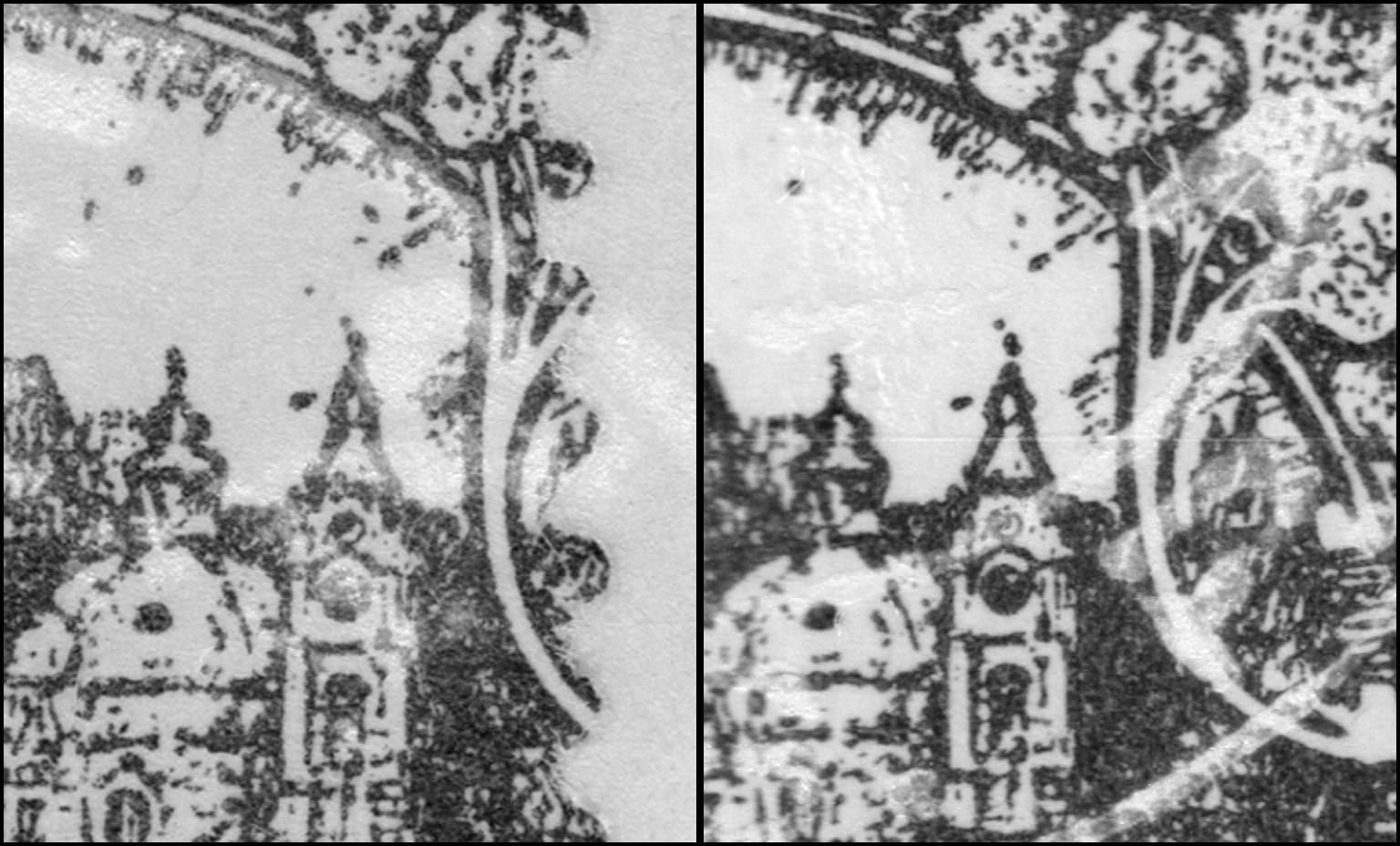
Zajímavostí této frankatury je, že přilepená 5h známka překrývá pravý okraj 15h — při určování proto nebylo vidět zhruba šestinu šířky kresby. Dole zůstal zachován okraj archu s podpisem MUCHA.
An imperforate 15h from plate VI postally used — Košice 2, 13 July 1920
A postcard franked with two Hradčany stamps — a 15 h brick red and a 5 h light green — looks unremarkable at first sight. Yet the KOŠICE 2 * Č.S.P. cancellation with the legible date 13 July 1920 ties a stamp that deserves attention: the 15h is imperforate and, as the plating showed, comes from printing plate 6. The card survives complete; the illustrations below are crops of its franking.
The date 13 July 1920 falls within tariff period III (15 March – 31 July 1920), during which the domestic postcard rate was 20 h. The franking of 15 h + 5 h = 20 h matches this rate exactly — a correctly paid postcard right at the end of period III, less than three weeks before the switch to the markedly higher period IV tariff (postcard 40 h from 1 August 1920).
Imperforate 15h sheets are commonly documented from printing plates 1 and 2. A postally used imperforate stamp from plate 5 or plate 6 is, by contrast, a rare occurrence — and exactly such a piece is documented here, with a full date of use.
Plating the stamp
The stamp was attributed by comparison against a reference library of used stamps (over 11,000 registered copies from all seven plates) as field 34 of printing plate VI. The attribution was confirmed by point flaws — the constellation of sky dots right of the cathedral and the characteristic dot just left of the tip of the sixth tower.
A curiosity of this franking: the affixed 5h stamp overlaps the right edge of the 15h, so roughly one sixth of the design width was hidden during attribution. The sheet margin with the MUCHA signature survives below.