ZoubkováníPerforation
Hodnota 15h má nejbohatší škálu úředních zoubkování z celé emise — vedle nezoubkované úpravy osm variant. Vysvětlení obou způsobů děrování najdete níže. Podíly vycházejí z rozboru 21 353 známek (sbírka J. Matouška).The 15h has the richest range of official perforations of the whole issue — eight varieties besides the imperforate form. An explanation of both perforating methods is below. The shares below are based on an analysis of 21,353 stamps (J. Matoušek’s collection).
| ZnačeníCode | Rozměr a druhGauge and kind | Doloženo na deskáchDocumented on plates | Podíl ve statisticeShare in statistics |
|---|---|---|---|
| — | nezoubkovanáimperforate | TD I, II, V, VI, VIIPlates I, II, V, VI, VII | 21,2 % |
| A | 13¾ : 13½ hřebenové13¾ : 13½ comb | TD I–VIIPlates I–VII | 16,1 % |
| B | 11¾ hřebenové11¾ comb | TD I–VIPlates I–VI | 25,7 % |
| C | 13¾ řádkové13¾ line | TD I, II, V, VIPlates I, II, V, VI | 22,2 % |
| D | 11½ řádkové11½ line | TD I, IIPlates I, II | 3,5 % |
| E | 11½ : 10¾ řádkové11½ : 10¾ line | TD I, IIPlates I, II | 1,0 % |
| F | 13¾ : 11½ řádkové13¾ : 11½ line | TD I, IIPlates I, II | 10,3 % |
| G | 11½ : 13¾ řádkové11½ : 13¾ line | TD I, IIPlates I, II | — |
| H | 13¾ : 10¾ řádkové13¾ : 10¾ line | TD I, IIPlates I, II | — |
Vzácná zoubkování G (11½:13¾) a H (13¾:10¾) se vyskytují pouze na deskách I a II; v evidenci je nyní 7 kusů G (mj. ZP 55, 53, 34, 17, 92/I a 42, 75/II) a 5 kusů H (pár 97+98/I, nově nalezený pár s razítkem Turnov a 84/I).The scarce perforations G (11½:13¾) and H (13¾:10¾) occur only on plates I and II; the records now hold 7 copies of G (incl. fields 55, 53, 34, 17, 92/I and 42, 75/II) and 5 copies of H (the 97+98/I pair, a newly found pair cancelled Turnov, and 84/I).
Nepravidelnosti v poloze perforace vůči kresbě — včetně kusů, na nichž zoubkování prochází kresbou — popisuje sekce Posun zoubkování na stránce Výrobní vady.Irregularities in the position of the perforation relative to the design — including copies where the perforation runs through the design — are covered in the Perforation shifts section on the Production flaws page.
Jak zoubkování vzniká — řádkové a hřebenovéHow perforation is made — line and comb
Zoubkování je řada dírek proděrovaných do archu tam, kde se známky mají oddělit. U hradčanské emise se používaly dva odlišné způsoby děrování a rozdíl mezi nimi je vidět především na rozích známky.Perforation is a row of holes punched into the sheet where the stamps are to be separated. Two different perforating methods were used for the Hradčany issue, and the difference between them shows above all at the corners of the stamp.
Řádkové zoubkováníLine perforation
- Stroj má jedinou řadu jehel a proděruje vždy jen jednu přímku napříč celým archem.The machine has a single row of pins and punches one straight line across the whole sheet at a time.
- Arch se postupně posouvá a linka po lince se proděruje jedním směrem; potom se arch otočí a stejně se udělá druhý směr.The sheet is advanced line by line in one direction; then it is turned and the other direction is done the same way.
- Vodorovné a svislé linky vznikají nezávisle na sobě, takže se v rozích nesejdou — díry se míjejí, zdvojují nebo v rohu chybí.Horizontal and vertical lines are made independently, so they do not meet at the corners — holes miss each other, double up, or are missing at the corner.
- Rozteč obou směrů se může lišit, protože je dělal jiný nástroj nebo jiný stroj — odtud kombinace jako 13¾ : 11½ a její obrácená podoba 11½ : 13¾.The two directions can have different gauges, because a different tool or machine made them — hence combinations such as 13¾ : 11½ and its reversed form 11½ : 13¾.
- Počet zubů na téže straně proto kolísá kus od kusu a krajní zub bývá neúplný.The number of teeth on the same side therefore varies from copy to copy, and the outermost tooth is often incomplete.
U 15h: C, D, E, F, G, H — starší způsob, desky I, II, V, VIOn the 15h: C, D, E, F, G, H — the earlier method, plates I, II, V, VI
Hřebenové zoubkováníComb perforation
- Nástroj má tvar hřebene: jednu dlouhou vodorovnou řadu jehel a na ní kolmé krátké výběžky, které zapadají mezi jednotlivé známky.The tool is shaped like a comb: one long horizontal row of pins with short perpendicular prongs that reach between the individual stamps.
- Jediný zdvih proto proděruje najednou tři strany celé řady známek — horní linku a všechny svislé předěly pod ní.A single stroke therefore perforates three sides of a whole row of stamps at once — the top line and all the vertical divisions below it.
- Arch se posune o jednu řadu a zdvih se opakuje; poslední zdvih uzavře spodní okraj.The sheet advances by one row and the stroke is repeated; the last stroke closes the bottom edge.
- Protože vodorovná i svislá perforace vzniká jedním úderem, v rohu leží jediná společná díra a roh je čistý.Because horizontal and vertical perforation are made by the same stroke, a single shared hole sits at the corner and the corner is clean.
- Počet zubů je na všech známkách řady stejný a rozměr je stálý.The tooth count is the same on every stamp in the row and the gauge is constant.
U 15h: A (13¾ : 13½) a B (11¾) — pozdější způsob, desky I–VIIOn the 15h: A (13¾ : 13½) and B (11¾) — the later method, plates I–VII
Jak to poznat na známceHow to tell them apart on a stamp
- Roh je rozhodující. Jedna pravidelná díra přesně v rohu = hřebenové. Roztřepený roh se dvěma překrývajícími se dírami, nebo naopak s dírou chybějící, = řádkové.The corner decides. One regular hole exactly at the corner = comb. A ragged corner with two overlapping holes, or with a hole missing, = line.
- Porovnejte protilehlé strany. U hřebenového mají všechny známky téže řady stejný počet zubů; u řádkového se počet i poloha zubů kus od kusu posouvá.Compare opposite sides. With comb perforation every stamp in a row has the same tooth count; with line perforation both the count and the position of the teeth shift from copy to copy.
- Změřte rozměr zoubkoměrem. Číslo udává počet zubů na 2 cm; první hodnota platí pro vodorovné strany, druhá pro svislé. Je-li uvedena jen jedna, jsou obě strany stejné.Measure the gauge with a perforation gauge. The figure gives the number of teeth per 2 cm; the first value applies to the horizontal sides, the second to the vertical ones. Where only one is given, both sides are the same.
- Pár nebo pruh pomůže. Na vícepásce je vidět celá řada rohů najednou a rozdíl mezi pravidelným a nepravidelným průběhem je nepřehlédnutelný.A pair or strip helps. On a multiple you see a whole run of corners at once, and the difference between a regular and an irregular course is unmistakable.
Pozor na záměnu: i u hřebenového zoubkování se dva sousední zdvihy mohou mírně minout. Nepravidelnost pak leží pouze na hranici mezi dvěma řadami, zatímco uvnitř řady zůstávají rohy čisté — u řádkového zoubkování je naopak nepravidelný každý roh.A common trap: two adjacent comb strokes can also be slightly out of register. The irregularity then lies only at the boundary between two rows, while the corners within the row stay clean — whereas with line perforation every corner is irregular.
Jak zoubkování eviduje katalog PofisHow the Pofis catalogue records the perforations
Specializovaný katalog řadí známky emise podle zoubkování do skupin označených velkými písmeny. Katalogové číslo vznikne spojením základního čísla hodnoty s písmenem skupiny; hodnota 15h má základní číslo 7, takže její zoubkované varianty jsou 7A až 7H. Odstíny se uvnitř každé položky značí malými písmeny a), b), c), d).The specialised catalogue sorts the stamps of the issue into perforation groups marked with capital letters. A catalogue number combines the basic number of the value with the group letter; the 15h has the basic number 7, so its perforated varieties run from 7A to 7H. Shades are lettered a), b), c), d) within each entry.
- HZ — hřebenové zoubkováníHZ (hřebenové zoubkování) — comb perforation
- ŘZ — řádkové zoubkováníŘZ (řádkové zoubkování) — line perforation
- OHZ — obrácené hřebenové zoubkování, tedy hřeben postupující zdola nahoru místo obvyklého směru shora dolů. U 15h se neuvádí; katalog je zaznamenává u jiných hodnot (5h, 20h, 25h, 30h).OHZ — inverted comb perforation, i.e. the comb working from the bottom upwards instead of the usual top-down direction. It is not listed for the 15h; the catalogue records it at other values (5h, 20h, 25h, 30h).
- Rozměr se zapisuje jako vodorovně : svisle. Je-li uvedeno jediné číslo, mají obě dvojice stran stejnou rozteč.The gauge is written as horizontal : vertical. Where a single figure is given, both pairs of sides have the same gauge.
| Kat. čísloCat. no. | SkupinaGroup | Zápis v kataloguCatalogue notation | DruhKind |
|---|---|---|---|
| 7A | A | HZ 13¾ : 13½ | hřebenovécomb |
| 7B | B | HZ 11¾ | hřebenovécomb |
| 7C | C | ŘZ 13¾ | řádkovéline |
| 7D | D | ŘZ 11½ | řádkovéline |
| 7E | E | ŘZ 11½ : 10¾ | řádkovéline |
| 7F | F | ŘZ 13¾ : 11½ | řádkovéline |
| 7G | G | ŘZ 11½ : 13¾ | řádkovéline |
| 7H | H | ŘZ 13¾ : 10¾ | řádkovéline |
Písmena A–H v tabulce na začátku stránky jsou právě tyto katalogové skupiny — značení na tomto webu se tedy s katalogem shoduje. Hodnota 15h je jediná známka emise, která je zastoupena ve všech osmi skupinách A–H; skupina G obsahuje vedle 15h už jen 30h a skupina H jen 25h.The letters A–H in the table at the top of this page are exactly these catalogue groups, so the notation used on this site agrees with the catalogue. The 15h is the only stamp of the issue represented in all eight groups A–H; besides the 15h, group G holds only the 30h and group H only the 25h.
Výjimečná zoubkování (I a L)Exceptional perforations (I and L)
Nad rámec osmi běžných skupin vede katalog samostatný oddíl Výjimečná zoubkování. Jde o kusy, na nichž se sešly dva různé perforační průchody — arch byl zčásti proděrován jedním nástrojem a dokončen jiným, takže jednotlivé strany téže známky mají různé zoubkování. Hodnoty 15h se týkají dvě z nich, skupiny I a L. Další výjimečná zoubkování (skupiny J a K) katalog uvádí už jen u hodnoty 30h páté kresby, která na tento web nepatří.Beyond the eight ordinary groups the catalogue keeps a separate section, Exceptional perforations. These are copies where two different perforating operations met — the sheet was partly perforated with one tool and finished with another, so the sides of one and the same stamp carry different perforations. Two of them concern the 15h: groups I and L. Further exceptional perforations (groups J and K) are listed only under the 30h of the fifth drawing, which lies outside this site.
| SkupinaGroup | Zápis v kataloguCatalogue notation | TypType | ZnámkaStamp |
|---|---|---|---|
| I | ŘZ 13¾ : 11½ + 10¾ | smíšenémixed | 7I — 15h cihlově červená15h brick red |
| L | ŘZ 13¾ + 11½ : 11½ | sdruženécompound | 7L — 15h cihlově červená15h brick red |
Sdružené a smíšené — v čem se lišíCompound and mixed — the difference
Rozdíl je vidět přímo ze zápisu. U sdruženého zoubkování (L) se na jedné známce sejdou dvě různá zoubkování — u 15h dvě různé rozteče téhož druhu, 13¾ a 11½ na protilehlých vodorovných stranách. U smíšeného zoubkování (I) se na jediné známce sejdou tři různé rozteče: vodorovně 13¾, svisle na jedné straně 11½ a na druhé 10¾.The difference follows straight from the notation. In a compound perforation (L), two different perforations meet on one stamp — on the 15h, two different gauges of the same kind, 13¾ and 11½ on the opposite horizontal sides. In a mixed perforation (I), three different gauges meet on a single stamp: 13¾ horizontally, and 11½ on one vertical side against 10¾ on the other.
Obě 15h varianty jsou vázány na řádkové zoubkování raných desek TD I–II, kde se rozteče 13¾, 11½ a 10¾ v archu potkávaly nejčastěji — je to táž výrobní situace, která stojí za vzácnými zoubkováními G a H.Both 15h varieties belong to the line perforation of the early plates I–II, where the gauges 13¾, 11½ and 10¾ met most often within a sheet — the same production situation that lies behind the scarce perforations G and H.
Soukromý průsek a průpichPrivate roulettes and pin-perforations
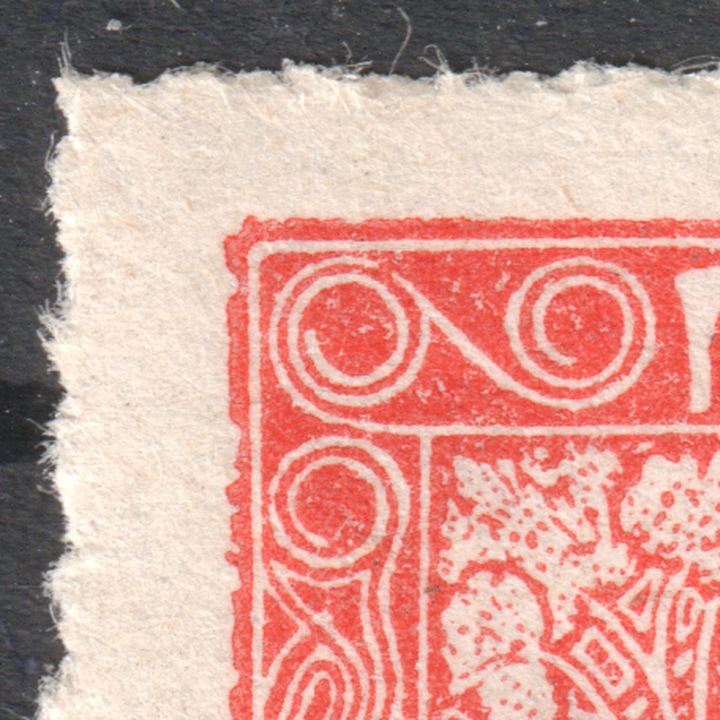
Emise vyšla nejprve nezoubkovaná a známky se z archu oddělovaly nůžkami. Tam, kde se s nimi pracovalo ve větším množství, si někdy pomohli sami: mezi známky prosekali nebo propíchali dělicí linku, aby se daly odtrhnout. Takové oddělení je soukromé — s výrobou známky nemá nic společného a katalog je mezi zoubkováními nevede.The issue appeared imperforate first, and stamps had to be cut from the sheet with scissors. Where they were handled in quantity, people sometimes helped themselves: they cut or pricked a separation line between the stamps so these could be torn apart. Such a separation is private — it has nothing to do with the manufacture of the stamp, and the catalogue does not list it among the perforations.
Průsek je řez: ostří — přímé, vlnkové nebo pilovité — projede papírem a nic z něj neubere. Průpich je řada drobných vpichů jehlou nebo hrotovým kolečkem. Ani v jednom případě nevzniká otvor, a proto po roztržení nezůstanou zuby s kulatými výkusy, ale vlnitá či pilovitá hrana s roztřepenými vlákny, případně řádka krátkých štěrbin.A roulette is a cut: a blade — straight, wavy or serrated — passes through the paper and takes none of it away. A pin-perforation is a row of small pricks made with a needle or a spiked wheel. Neither of them makes a hole, and so tearing leaves no teeth with round bites out of them, but a wavy or saw-toothed edge with frayed fibres, or a line of short slits.
Jak to rozeznat od pravého zoubkováníHow to tell it from a genuine perforation
- Žádné kulaté otvory. Perforační jehla papír vysekne a kolečko odpadne; průsek i průpich papír jen rozdělí, takže mezi zuby nikde nechybí hmota.No round holes. A perforating pin punches the paper out and the disc falls away; a roulette or a pin-perforation only divides the paper, so no material is missing between the teeth.
- Hrana je vláknitá. Zuby jsou mělké, nestejně vysoké a na okraji zůstávají chloupky papíru — papír se v řezu dotrhl.The edge is fibrous. The teeth are shallow and of uneven height, and wisps of paper are left along the edge — the sheet finished tearing along the cut.
- Rozteč nesedí na žádnou skupinu. Zoubkoměr dá mezivýsledek, který se navíc kus od kusu i strana od strany mění.The gauge matches no group. A perforation gauge gives an in-between reading, and one that varies from copy to copy and even from side to side.
- Linka vede rukou. Bývá jen na některých stranách, mírně uhýbá od svislice nebo se v rohu nesejde — stroj by ji vedl rovně a na celý arch najednou.The line is hand-guided. It is often on some sides only, wanders slightly off the vertical or fails to meet at the corner — a machine would run it straight and across the whole sheet at once.
Známka zůstává nezoubkovaná. Soukromý průsek nebo průpich je zajímavost, ne katalogová varianta, a do statistik zoubkování se nepočítá. A protože jej lze udělat kdykoli i dnes, má největší váhu kus, u něhož oddělení potvrzuje dobové použití — celistvost, nebo razítko přecházející přes okraj.The stamp stays imperforate. A private roulette or pin-perforation is a curiosity, not a catalogue variety, and it does not count towards the perforation statistics. And since it can be made at any time, even today, the copies that carry weight are those where contemporary use vouches for the separation — a cover, or a cancellation running across the edge.
Perforační vadyPerforation flaws
Vedle katalogových skupin existují kusy, u nichž perforace neproběhla podle plánu — nástroj prošel toutéž mezerou dvakrát (dvojitá perforace), nebo jedna řada úplně vypadla a známky se musely oddělit střihem (vynechaná perforace). Nejde o samostatná zoubkování, ale o výrobní vady: rozteč zůstává táž a známka se určuje podle řady odpovídající řádnému průchodu. Popis obou vad, vyobrazení vzorků i oddíl o posunu zoubkování vůči kresbě najdete na stránce Výrobní vadyProduction flaws.Besides the catalogue groups there are copies where perforating did not go to plan — the tool passed through one and the same gap twice (double perforation), or a row was left out entirely and the stamps had to be separated with scissors (missing perforation). These are not perforations of their own but production flaws: the gauge stays the same and the stamp is identified from the row that corresponds to the proper pass. Both flaws, the specimens illustrating them and the part on the shift of the perforation against the design are on the Výrobní vadyProduction flaws page.
Nejranější doložená použitíEarliest documented usages
Z 8 005 čitelně datovaných razítek. Pořadí ukazuje, jak výroba postupovala od řádkových zoubkování D/E/F na raných deskách k hřebenovým A/B na deskách pozdějších.From 8,005 legibly dated cancellations. The sequence shows production moving from line perforations D/E/F on the early plates to comb perforations A/B on the later ones.
| Zoubkování (deska)Perforation (plate) | Nejranější datumEarliest date |
|---|---|
| D (TD 1–2)D (plates 1–2) | 30. 6. 1919 |
| E (TD 1–2)E (plates 1–2) | 8. 8. 1919 |
| F (TD 1–2)F (plates 1–2) | 12. 9. 1919 |
| C (TD 1–2)C (plates 1–2) | 9. 11. 1919 |
| B (TD 1–2)B (plates 1–2) | 30. 12. 1919 |
| C (TD 5–6)C (plates 5–6) | 1. 2. 1920 |
| B (TD 5–6)B (plates 5–6) | 8. 2. 1920 |
| G (TD 1–2)G (plates 1–2) | 18. 2. 1920 (Praha 1) |
| A (TD 7)A (plate 7) | 1. 3. 1920 |
| H (TD 1–2)H (plates 1–2) | 15. 3. 1920 (Turnov) |
| B (TD 4)B (plate 4) | 23. 3. 1920 |
| A (TD 5–6)A (plates 5–6) | 25. 3. 1920 |
| A (TD 1–2)A (plates 1–2) | 2. 4. 1920 |
| B (TD 3)B (plate 3) | 19. 4. 1920 |
| A (TD 3)A (plate 3) | 27. 4. 1920 |
| A (TD 4)A (plate 4) | 8. 6. 1920 |
Srovnání tří sbírekComparison of three collections
Podíly zoubkování se mezi velkými sbírkami a údaji Monografie liší — vizPerforation shares differ between large collections and the Monograph data — see the statistikystatistics.